Uncle Tom’s Cabin
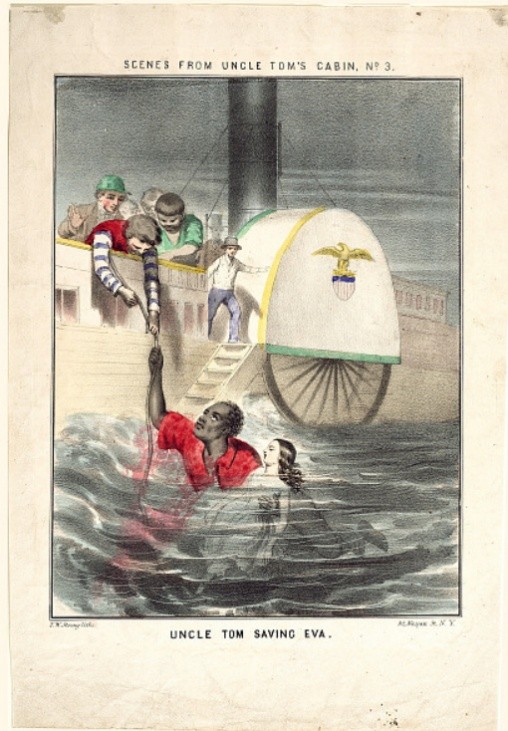
Throughout this popular culture book, all the slaves are expected to put the higher social standings in front of themselves. While the story did bring slavery to the eyes of the world, it showed how discriminated the Black race is. The Black community possesses a racial social standing in which they are seen as unimportant, overlooked, and unprotected especially in the United States.
Uncle Tom saving Eva when she falls off the boat demonstrates how lower racial social standings are deemed less important in society, in this case the lower racial social standing risks his life for the higher racial social standing, specifically because he is Black. Racial social standings correlate directly through adaptations of popular culture. By accumulating new fictional characters Stowe creates a narrative of how racial social standings are treated within our real world. By doing so we are shown how their racial social standings effect how they live and are treated. In this text, mainly through racism and through the white moderate.
Stowe directly twisted racism into popular culture by showing how racial social standings are seen in society. No one on the boat, expect Eva’s father, considered jumping into the water to save her and then Tom did and everyone basically ignored this act because he is expected to risk his own life due to his racial social standing, as seen in the rest of the book.
Further popular culture adaptations of Uncle Tom’s Cabin are made by diminishing Black racial social standings even further.
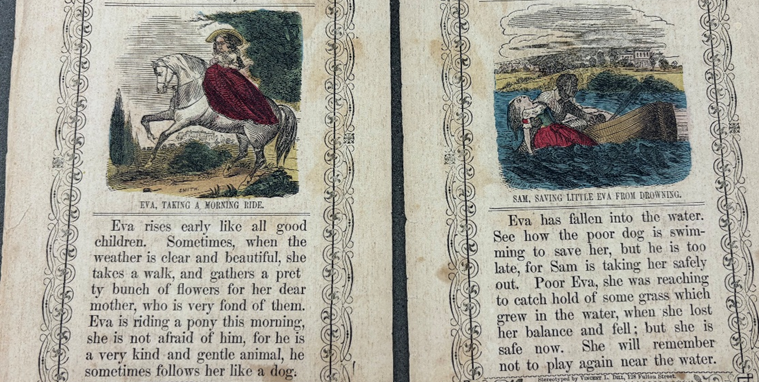
Little Eva, The Flower of the South is a spinoff of the original popular culture book Uncle Tom’s Cabin. However, the book lightly changed the original story by changing, Eva’s age, the characters in Uncle Tom’s Cabin (no mention of Tom- only a Sam, not even Eva’s best friend Topsy is put in the book, just random characters), her hometown (Alabama instead of New Orleans), and her view of slavery. This gave the readers of this book a misleading positive outlook on how to feel about slavery other than Eva is a perfect little girl, and slavery does not seem so bad. This further makes slavery less serious and more kid-like.
The short book is then ultimately pushed towards the white moderate in this case to stop the spread of anti-slavery, without the readers even knowing it, through an adorable book about the angel Eva. By twisting the original narrative to fit the white moderate perspective, Little Eva, The Flower of the South demonstrates how high a person is in society determines their racial social standings and how they are treated. Authors twist real life scenarios into a book (theme of popular culture) narrative to draw the attention of these worldly problems to the readers with their racial social standings. This shows through a broader repetition in popular culture of how authors can transform real racial social problems into lesser misleading, more positive, narratives that reinforce our real world racial and social standings.